

Resources
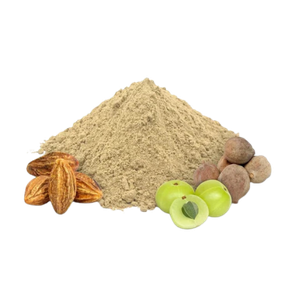
Triphala
A traditional blend of Amla, Haritaki, and Bibhitaki that supports digestion and gentle detoxification. It restores natural balance and promotes regular bowel movement.

Ashwagandha
A powerful adaptogen that helps the body manage stress, restore energy, and build strength. It calms the nervous system while improving endurance.

Brahmi
Known for enhancing memory and concentration, Brahmi supports mental clarity and reduces stress. It promotes focus and better sleep.

Guggulu
Supports healthy metabolism and helps reduce fat accumulation. It aids in managing cholesterol and inflammation while balancing Kapha.
Time Of Day
Your Body Keeps Time — Even When You Don’t
Your body follows a natural rhythm that operates quietly in the background of your daily life. Some mornings feel effortless—you wake up clear, focused, and energized. Other days feel heavy, where even simple tasks take more effort. These shifts are not random. They reflect an internal timing system that influences how you think, move, digest, and rest throughout the day.
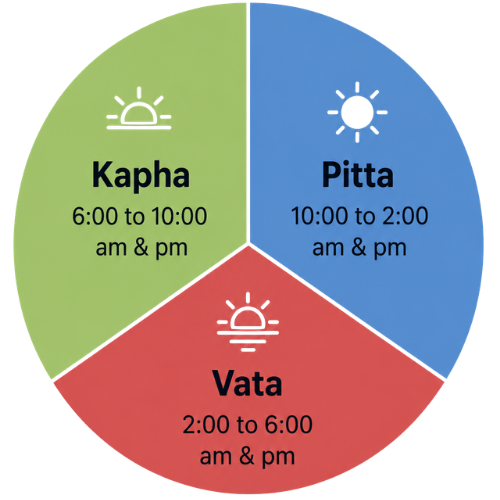
Long before modern science explored circadian rhythms, Ayurveda described this natural cycle through three governing energies: Vata, Pitta, and Kapha. Each of these energies dominates specific time periods across the day and night, shaping your mental clarity, physical energy, digestion, and sleep quality. When your daily habits align with these cycles, your body works with you. When they don’t, imbalance slowly builds—often showing up as fatigue, restlessness, or digestive discomfort.
Throughout the day, your body moves through phases of activity, transformation, and recovery. There are hours best suited for focus and productivity, others for nourishment and digestion, and some for rest and repair. Ignoring these patterns—such as skipping meals, working late into the night, or maintaining irregular routines—can disrupt this balance and make even simple routines feel exhausting over time.
The 5 satrs of Ayurveda

Understanding Your Daily Body Rhythm
Your body follows a natural cycle influenced by Vata, Pitta, and Kapha. Each phase affects your energy, focus, digestion, and rest. Learning this rhythm helps you structure your day more effectively.

How Ayurveda Shapes Your Daily Routine
Ayurveda explains how different times of the day support different activities—from focus and digestion to rest and recovery. Aligning your routine with these phases brings better balance and stability.

The Energy That Moves You
There are days when your mind runs ahead of you. Ideas come quickly, and you move from one task to another without pause. This restless current — the invisible movement beneath your actions — is what Ayurveda calls Vata.
Vata is formed from the elements of air and space. It governs movement in the body, including breathing, circulation, nerve impulses, and the flow of thoughts. It is the force that initiates and drives activity.

Vata Balance Tip
If Vata is movement, Pitta is transformation. It is formed from fire with a small element of water, and it governs digestion, metabolism, body temperature, hormonal activity, vision, and sharp mental processing. Whenever something is being broken down, analysed, or converted — food into energy, information into understanding, effort into results — Pitta is at work.
In daily life, Pitta shows up as drive. The ability to focus deeply. The hunger that arrives on time. The sharpness that allows decisions to be made quickly. When balanced, Pitta expresses as confidence without aggression, productivity without burnout, clarity without harshness.

A Practical Note on Balancing Kapha
Introduce variety into routine. Stability is Kapha’s strength — but only when it does not turn into stagnation.
Time does not rush, and the body does not forget. Each day, Vata moves, Pitta transforms, and Kapha stabilises in a rhythm that continues whether we notice it or not. Most fatigue, irritation, and heaviness are not signs of failure, but signs of misalignment — of living slightly out of sync with this natural order. Ayurveda does not ask for perfection; it asks for awareness. When we begin to observe when to move, when to eat, when to work, and when to rest, the struggle to manage the day softens. The rhythm was always there. The task is simply to live in time with it.
Vata Time Cycle
When balanced, Vata brings clarity, creativity, and energy. When imbalanced, it shows up as irregularity—bloating, poor sleep, anxiety, and feeling “tired but wired.”
Balancing Vata requires rhythm. Regular meals, warm food, consistent sleep, and reduced stimulation help restore stability. Structure calms what irregularity disturbs.


Vata Balance Tip
If Vata is movement, Pitta is transformation. It is formed from fire with a small element of water, and it governs digestion, metabolism, body temperature, hormonal activity, vision, and sharp mental processing. Whenever something is being broken down, analysed, or converted — food into energy, information into understanding, effort into results — Pitta is at work.
In daily life, Pitta shows up as drive. The ability to focus deeply. The hunger that arrives on time. The sharpness that allows decisions to be made quickly. When balanced, Pitta expresses as confidence without aggression, productivity without burnout, clarity without harshness.
Pitta dominates two specific windows in the 24-hour cycle: 10:00 AM to 2:00 PM and 10:00 PM to 2:00 AM. The midday period is when digestive fire (agni) is strongest. This is why Ayurveda traditionally recommends the largest meal of the day at lunch. The body is physiologically primed to digest efficiently during these hours. Skipping lunch, eating hurriedly, or replacing meals with stimulants during this window disrupts natural digestive rhythm.
A Practical Note on Balancing Kapha
- Wake early.
- Move daily.
- Keep dinners light.
- Avoid prolonged inactivity.
Introduce variety into routine. Stability is Kapha’s strength — but only when it does not turn into stagnation.
Time does not rush, and the body does not forget. Each day, Vata moves, Pitta transforms, and Kapha stabilises in a rhythm that continues whether we notice it or not. Most fatigue, irritation, and heaviness are not signs of failure, but signs of misalignment — of living slightly out of sync with this natural order. Ayurveda does not ask for perfection; it asks for awareness. When we begin to observe when to move, when to eat, when to work, and when to rest, the struggle to manage the day softens. The rhythm was always there. The task is simply to live in time with it.
