

Blog
5 Ayurvedic Habits That Cost Nothing But Change Everything


Ayurveda focuses on achieving balance within the body through natural healing methods and preventive care. By understanding individual body types and maintaining proper lifestyle habits, it becomes easier to improve digestion, boost immunity, and enhance overall well-being. This holistic approach helps the body stay strong, active, and resilient.
Modern lifestyles often create imbalances that affect both physical and mental health. Ayurvedic practices such as herbal supplementation, balanced nutrition, and daily wellness routines help restore this balance naturally. These time-tested methods support long-term health without relying on harsh treatments.
Adopting Ayurvedic principles encourages mindful living and sustainable health practices. With regular use of natural remedies and healthy habits, individuals can experience improved vitality, better mental clarity, and a more balanced lifestyle.
True wellness is achieved when the body, mind, and lifestyle are in harmony, supported by the power of nature.A

Adlay LIVAID-DS Herbal Liver Tonic


Admens | Her Hormonal Balance
₹222.00 – ₹592.00Price range: ₹222.00 through ₹592.00
Ashwagandha | Stress Less, Live More

Giloy | Your Daily Immunity Shield


MemoJack | Calm Mind, Better Sleep
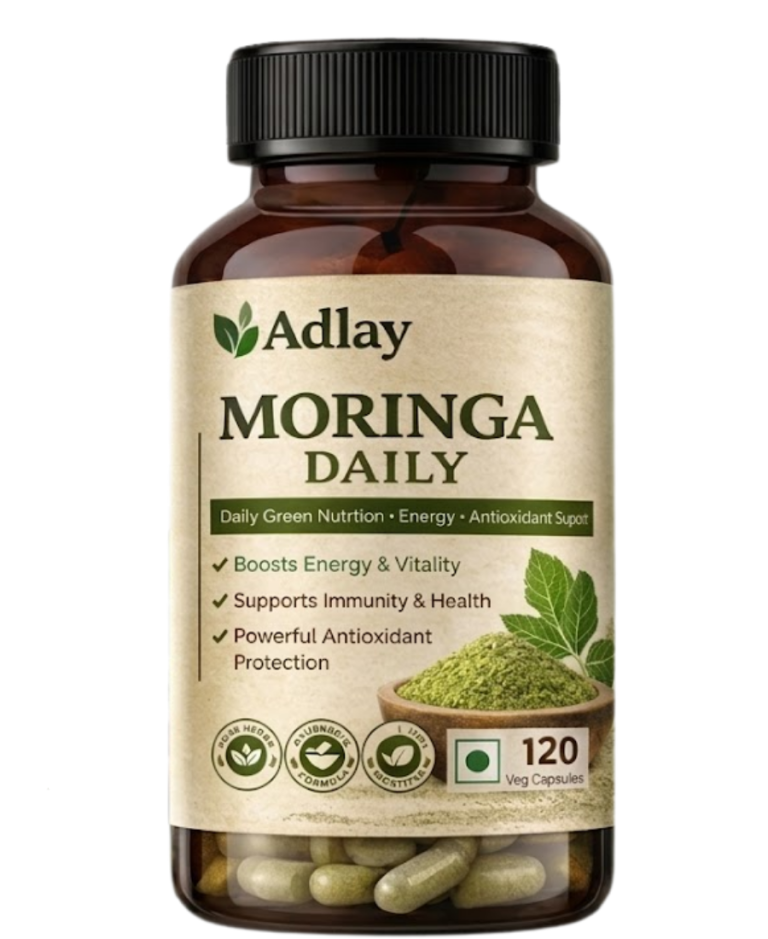

Moringa Daily | Nature’s Multivitamin
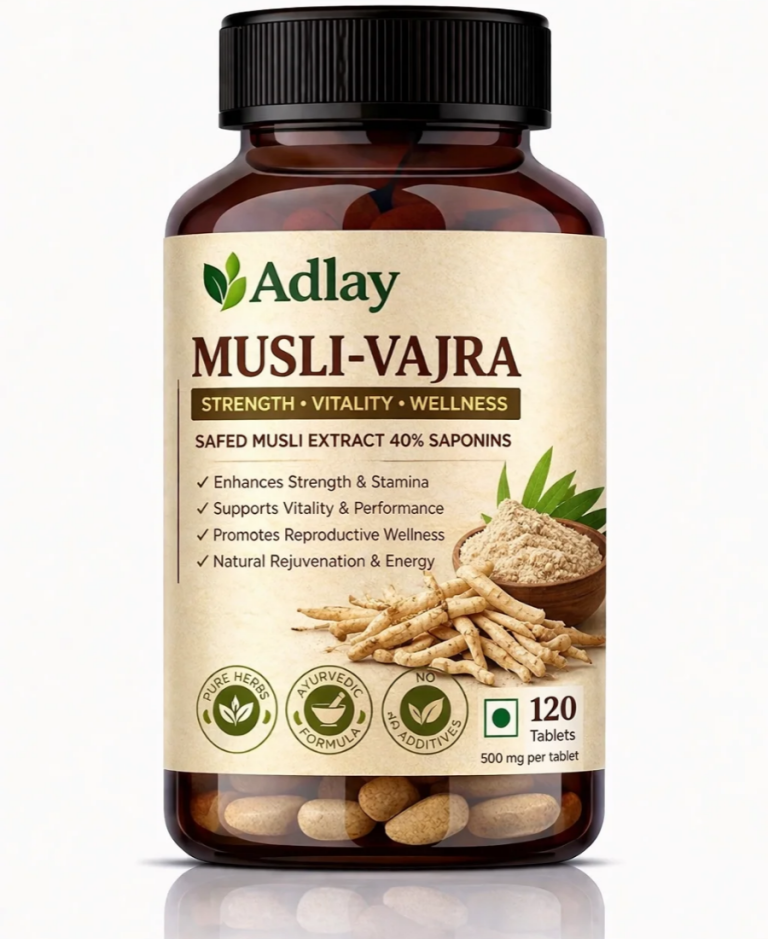
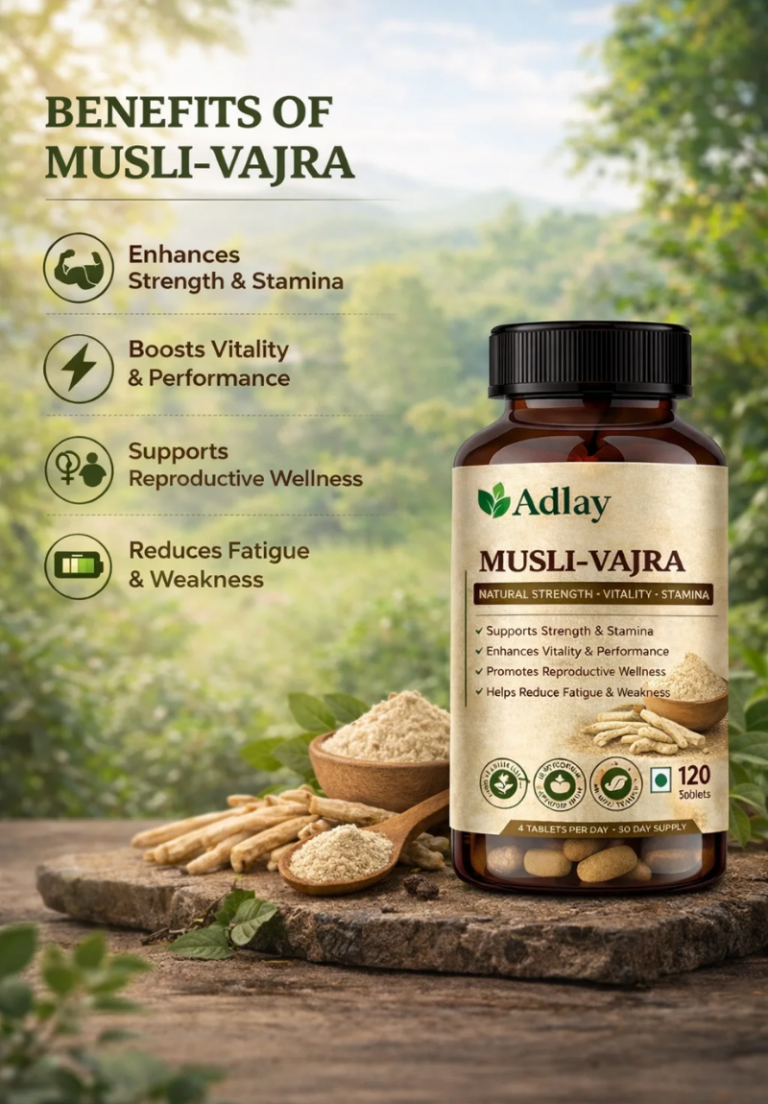
Musli Vajra | Strength & Stamina for Men
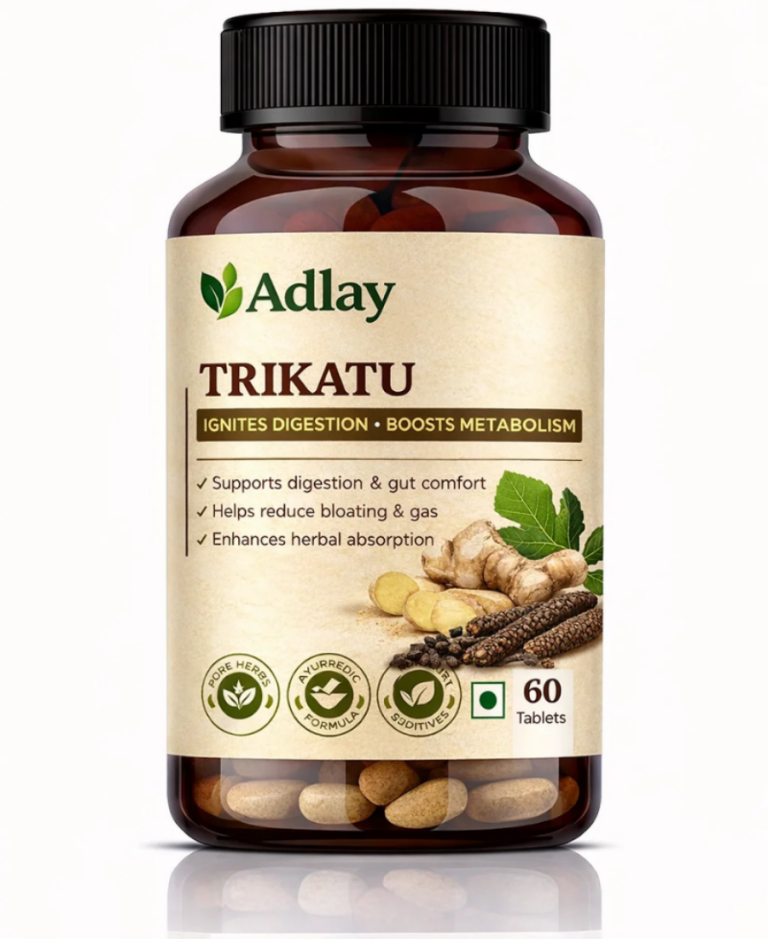
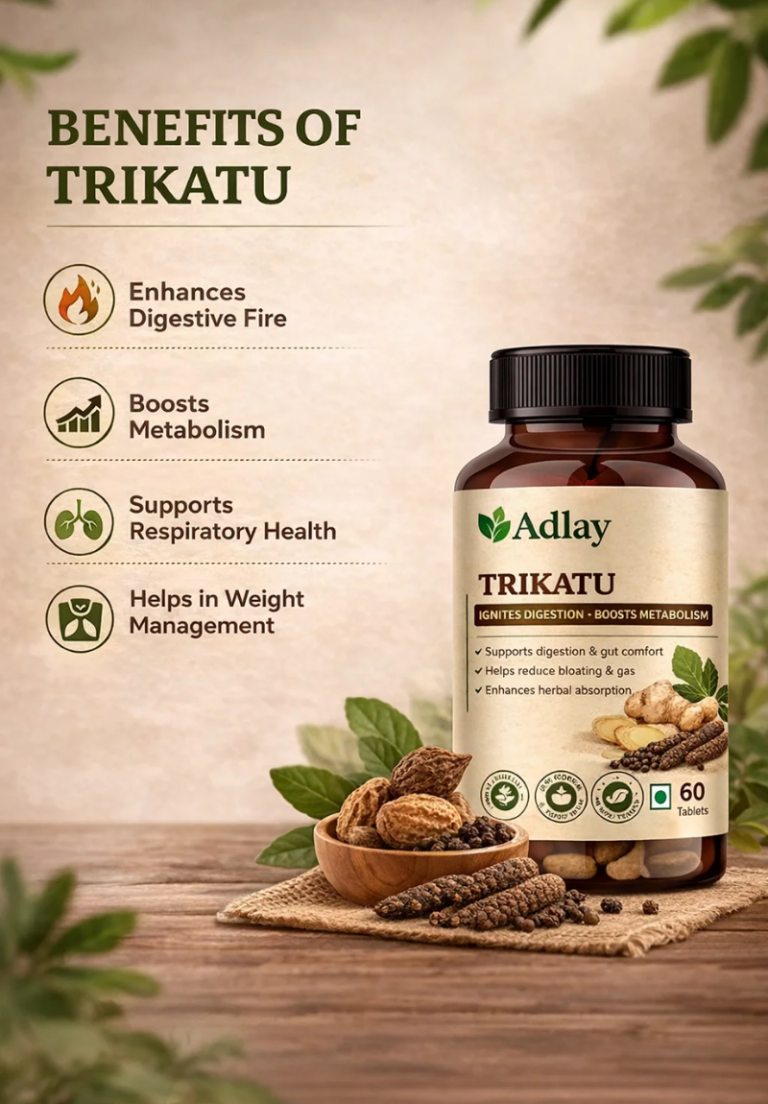
Trikatu | Ignite Your Digestive Fire
Ayurveda provides a holistic approach to health by focusing on balance, prevention, and natural healing. By following simple daily routines, using herbal formulations, and maintaining a balanced diet, individuals can improve overall wellness and lead a healthier lifestyle.
Supporting Digestive Health
Ayurvedic remedies help improve digestion, enhance nutrient absorption, and maintain gut balance. Natural ingredients work gently to support metabolism and promote long-term digestive wellness.
Boosting Natural Immunity
Herbal formulations strengthen the body’s defense system, helping it adapt to daily stress and environmental changes. Regular use supports immunity, increases energy levels, and promotes overall vitality.
Ayurveda focuses on maintaining balance within the body through natural healing and preventive care. By adopting healthy lifestyle practices, balanced nutrition, and herbal support, individuals can improve overall wellness, boost immunity, and maintain long-term health naturally.
We are an Ayurvedic pharmaceutical company. We make medicines. We believe in them — we take them ourselves and give them to our families. But we would be doing you a disservice if we did not tell you this plainly:
The most powerful Ayurvedic interventions are not products. They are habits.
The Ashtanga Hridayam — one of the three canonical texts of classical Ayurveda — devotes an entire chapter to Dinacharya: the daily routine. Not herbs. Not formulations. A routine. The Ayurvedic physicians who wrote that chapter understood something that modern wellness culture has largely forgotten: the body does not primarily need to be supplemented. It needs to be respected — through consistent, intelligent daily practice.
The five habits in this article are drawn directly from that Dinacharya framework. They cost nothing. They require no equipment. They can be started tonight or tomorrow morning. And if you do all five consistently for 30 days, you will feel a difference that no supplement alone could produce.
Before you read further: This article asks nothing of you except honest effort. No purchases necessary. No products to buy. If at the end you want to explore Ayurvedic herbs to build on these foundations — wonderful. But the habits come first. Always.
The Ashtanga Hridayam prescribes Ushnapana — the drinking of warm water — as one of the foundational acts of Dinacharya. Before any food, before any other drink, the first thing that enters the body each morning should be warm water. Not cold. Not room temperature. Warm — approximately the temperature of a comfortable bath.
This is not folk medicine. The mechanisms are well understood and straightforward. After 6–8 hours of overnight fasting, the digestive tract is dry, cool, and still in its overnight cleansing mode. Cold water in this state causes a thermal shock that constricts the mucosal lining. Warm water, by contrast, gently activates peristalsis — the wave-like contractions of the gut — signalling the digestive system to begin its day. It also begins to mobilise the Ama (metabolic residue) that has settled overnight, preparing it for elimination.
The white coating on the tongue that many people notice in the morning — a classical sign of Ama accumulation — visibly reduces within 2–3 weeks of this practice alone. That is not a metaphor. It is a measurable change in the gut's morning state.
- 1.Boil water the night before and keep it in a flask, or heat it fresh in the morning.
- 2.Drink one full glass (200–300ml) of warm water before anything else — before chai, coffee, checking your phone, or breakfast.
- 3.Optional — add a squeeze of fresh lemon and a small slice of ginger for enhanced Ama-clearing and Agni-kindling effect.
- 4.Wait 15–20 minutes before breakfast. This is the window in which gut motility activates and the overnight cleansing process completes.
The Charaka Samhita is unambiguous on this point: Madhyahne bhojanam sreshtham — the midday meal is the best meal. Eat your largest, most nourishing meal between 12 noon and 1pm. This is when digestive fire (Agni) is at its absolute peak — when the body's enzymatic activity, bile production, and metabolic capacity are all at their highest. The same meal eaten at 9pm produces a fundamentally different and inferior metabolic outcome.
For the vast majority of Indian families, this principle has been completely inverted. Breakfast is rushed or skipped. Lunch is a quick, minimal affair eaten at a desk or skipped entirely. Dinner is the main event — the large, elaborate, late-evening meal that the family gathers around. This inversion is not just culturally modern. It is biologically counterproductive — and the Charaka Samhita predicted every consequence of it 2,000 years ago.
The consequences are familiar: post-dinner heaviness, disrupted sleep, weight gain around the middle, sluggish mornings, and an afternoon energy crash that nothing seems to fix. All of these are direct, predictable results of eating the largest meal when Agni is weakest.
- 1.Eat lunch between 12 noon and 1pm — not later. Set a reminder if needed for the first two weeks.
- 2.Make it a real meal — dal, sabzi, roti or rice, some protein. Not a snack or a sandwich.
- 3.Sit down. Turn your screen away or off. Eating while distracted suppresses digestive enzyme secretion measurably.
- 4.Keep dinner light — soup, khichdi, sabzi without heavy starches. And eat it by 7:30pm.
- 5.Do not skip breakfast. Keep it light but do not skip it — skipping creates erratic Agni.
The Ashtanga Hridayam prescribes Shatapadam — the hundred steps — after the evening meal. Walk a hundred steps after dinner. In practice this means 10–15 minutes of gentle, unhurried walking — not exercise, not a brisk workout, simply movement. The purpose is threefold: to assist gastric emptying, to prevent the fermentation of undigested food that causes overnight Ama formation, and to support the transition from the active Pitta-evening into the restful Kapha-night.
This habit has attracted significant modern scientific attention — and the results are remarkably consistent with the Ayurvedic prescription. A 2022 meta-analysis found that just 2–5 minutes of light walking after meals was sufficient to measurably reduce postprandial blood glucose levels. 15 minutes of post-dinner walking reduces next-morning fasting glucose, improves triglyceride clearance, and accelerates gastric emptying by up to 30%. For the person who goes straight from the dining table to the sofa and then to bed, food ferments in a static gut all night — producing gas, bloating, and Ama. The walk breaks this cycle mechanically.
There is also a psychological dimension that the classical texts understood without the language of modern neuroscience: the transition from the stimulation of eating and conversation to the stillness of approaching sleep requires a bridge. The gentle walk is that bridge — it signals the nervous system to begin its wind-down without the abruptness of going from dinner to a screen to lying in bed wondering why sleep won't come.
- 1.Within 10–15 minutes of finishing dinner, put on your shoes and step outside. If you live in an apartment, walking in the corridor or up and down stairs works too.
- 2.Walk gently for 10–15 minutes. This is not exercise — it should feel comfortable, even pleasant.
- 3.Leave the phone inside or in your pocket. The purpose of this walk is to be present, not to check notifications.
- 4.If dinner was later than ideal, extend the walk to 20 minutes to compensate for the weaker Agni at that hour.
If you have read our article on the Ayurvedic Body Clock, you know this already: the 10pm–2am window is governed by Pitta — the body's fire of transformation. When you are asleep during this window, Pitta powers the body's deepest repair work: liver detoxification, immune memory consolidation, cellular regeneration, hormone production. When you are awake during this window, Pitta produces the infamous "second wind" — the sudden alertness at 11pm that feels like energy but is actually your body's repair cycle being hijacked.
Every hour of repair-cycle sleep you miss between 10pm and 2am is an hour the body cannot get back. The consequences accumulate slowly and then all at once — chronic inflammation, hormonal imbalance, weight gain, accelerated ageing, reduced cognitive function. These are not dramatic claims. They are the well-documented consequences of chronic Pitta-window sleep deprivation, described both in the Ashtanga Hridayam and in decades of modern chronobiology research.
The 10pm Rule does not ask you to fall asleep at 10pm. It asks you to be horizontal, screen-free, and still by 10pm. The body's sleep architecture will do the rest — if you give it the right conditions.
- 1.Set a phone alarm for 9:15pm labelled "Begin wind-down." This is your screen-dimming, activity-slowing signal.
- 2.By 9:30pm — no new work, no stimulating content, no social media scrolling. Reading, gentle conversation, or calm music only.
- 3.By 10pm — lights low, in bed. Phone on charge outside the bedroom if possible. Or face-down on silent.
- 4.The first 3–5 nights you will feel like you "can't sleep" at 10pm. This is Pitta-fire resisting the change. It typically resolves within a week as the sleep-wake cycle resets.
- 5.Do not check the time. Do not calculate how many hours of sleep you'll get. Simply be still. The body knows what to do if you stop interfering.
Abhyanga — self-massage with warm oil — is described in the Ashtanga Hridayam with a striking list of benefits: it reduces Vata (nervous system agitation), strengthens and tones the body, improves skin quality, enhances the depth of sleep, slows the visible signs of ageing, and builds overall resilience. The classical prescription is daily for those who can manage it, weekly as a minimum.
The mechanism that classical Ayurveda understood intuitively — and that modern neuroscience has now confirmed — is the relationship between skin contact, the nervous system, and the stress response. The skin is the body's largest sensory organ and is densely innervated with receptors that, when stimulated by warm, sustained pressure, activate the parasympathetic nervous system — the "rest and digest" branch that most modern adults spend insufficient time in.
A 2010 study at the Touch Research Institute at the University of Miami found that moderate-pressure massage reduced cortisol by an average of 31% and increased serotonin by 28%. A single Abhyanga session produces a measurable and meaningful shift in the autonomic nervous system — from the chronic sympathetic overdrive of modern life toward the parasympathetic restoration that the body actually needs to repair itself.
This is the habit that surprises people most. They expect it to feel like a luxury. It feels, instead, like a basic need that has been unmet for a very long time.
- 1.Choose your oil: Sesame oil (tila taila) is the classical prescription — warming, Vata-pacifying, deeply nourishing. Coconut oil works well in summer or for Pitta types. Plain coconut or sesame from your kitchen is perfectly acceptable.
- 2.Warm the oil: Place the oil bottle in a bowl of hot water for 5 minutes. Warm oil penetrates the skin far more effectively than room-temperature oil and feels dramatically better.
- 3.Apply and massage: Begin at the crown of the head (optional but classical), move to the face, neck, shoulders, arms, chest, abdomen, back (as far as you can reach), legs, and feet. Use long strokes on long bones, circular strokes at joints. Firm pressure but not painful.
- 4.Rest: Leave the oil on for 15–20 minutes. Sit quietly, read, or simply rest. This is the penetration time — the oil is absorbed into the deeper skin layers during this window.
- 5.Shower: Wash off with warm water and mild soap. You will feel — and most people notice this immediately — noticeably calmer, softer in the skin, and more settled than before you began.
"You do not need to overhaul your life. You need to do five small things, consistently, every day. Ayurveda has known this for 2,000 years. Start tonight."
The 10-Day Challenge — One Habit at a Time
Don't try all five at once. Add one every two days. By Day 10 all five are running. This is the classical approach to Dinacharya — incremental adoption, not overwhelming transformation.
When you're ready for the next layer: These five habits are the foundation. Once they are running consistently, Ayurvedic herbs become dramatically more effective — because they have a strong foundation to build on. Ashwagandha works better when you are sleeping by 10pm. Triphala works better when you are walking after dinner. Trikatu works better when you are eating your largest meal at noon. The habits and the herbs are designed to work together — not as substitutes for each other.
Ready to Add the Herbal Layer?
Once your Dinacharya foundation is in place, our Ayurvedic formulations are here to build on it — not replace it.
Explore Adlay Products →Reviewed by a qualified Ayurvedic physician before publication.
