

Blog
The Indian Man at 40 — What Ayurveda Says About Energy, Stress and Vitality

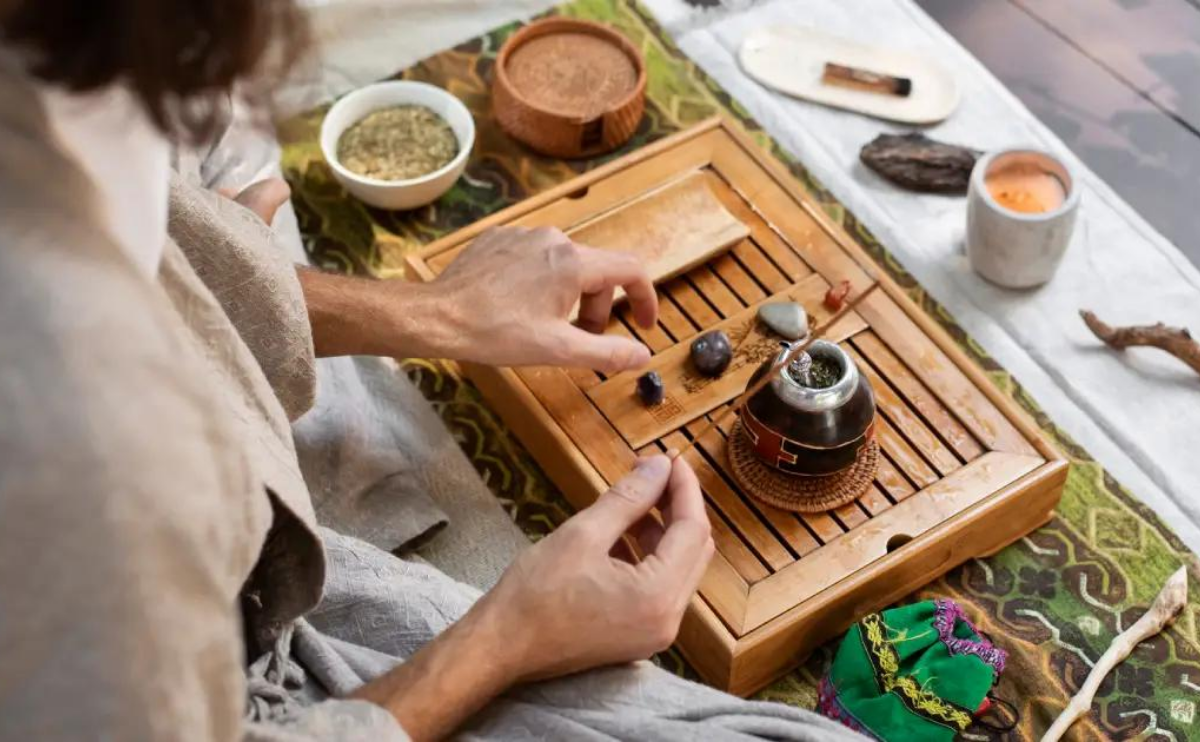
Ayurveda is a holistic system of healthcare that focuses on achieving balance between the body, mind, and lifestyle. It emphasizes natural healing through proper nutrition, herbal support, and daily routines that align with nature. By following Ayurvedic principles, individuals can maintain better health, improve energy levels, and prevent common lifestyle-related issues.
A balanced lifestyle plays a crucial role in maintaining overall wellness. Simple habits such as mindful eating, regular physical activity, and stress management can significantly improve both physical and mental health. Ayurvedic herbs further support this process by enhancing digestion, boosting immunity, and promoting long-term vitality.
Maintaining a healthy lifestyle through Ayurveda involves balancing diet, daily routines, and natural herbal support. By following these principles, the body becomes more resilient, energy levels improve, and overall well-being is enhanced. Consistent care and mindful habits play a key role in achieving long-term health naturally.
Supporting Natural Immunity
Ayurveda focuses on maintaining balance within the body through natural methods such as proper diet, herbal support, and a healthy lifestyle. By following these principles, individuals can improve digestion, boost immunity, and enhance overall well-being. This holistic approach helps the body stay energized and resilient against daily stress.
A balanced body and mind are the foundation of true wellness. Ayurveda encourages mindful living, natural healing, and long-term health through consistent care and harmony with nature.
He is 42 years old. He runs a business, manages a team, supports his parents, raises his children. He exercises occasionally — less than he used to. He sleeps 6 hours on a good night. He can't remember the last time he woke up and felt genuinely rested. By 3pm his concentration is unreliable. He has put on weight around the middle — not dramatically, but enough to notice. His temper is shorter than it was at 32. He is not sick. But he is definitely not well.
If this sounds familiar — either as a description of yourself or of someone you know — this article is for you.
What is happening to the Indian man in his 40s is not a mystery. It is not simply "aging." It is a specific, well-understood biological transition that Ayurvedic medicine has been mapping — and addressing — for over 2,000 years. The Charaka Samhita describes it as the beginning of the decline of Pitta dominance and the rise of Vata — a shift in the body's fundamental energy balance that, left unaddressed, accelerates everything the 40-year-old man is already experiencing.
"The body speaks quietly at 40. It is still asking, not demanding. This is the best time to listen — and to act."
What Is Actually Happening at 40
Between the ages of 35 and 50, the Indian man typically experiences a convergence of biological and lifestyle factors that compound each other in ways that feel sudden but have been building for years:
The key insight from classical Ayurveda is this: these are not separate problems. They are one problem — a body and mind running on depleted reserves, without adequate recovery, over an extended period. Address the root, and the branches begin to heal.
The 5 Herbs — Classical Prescriptions for the Modern Indian Man
What follows is not a supplement sales list. It is a distillation of what the Charaka Samhita, the Ashtanga Hridayam, and the Sushruta Samhita prescribe for the specific cluster of symptoms the 40-year-old Indian man experiences — cross-referenced with contemporary research where it exists. We have included one herb we don't sell — because your health matters more than our catalogue.
If there is one herb that the Charaka Samhita specifically prescribes for male vitality, stress resilience, and the preservation of Ojas (vital essence) in middle age — it is Ashwagandha. Classified as a Rasayana (rejuvenating tonic) and a Vajikarana (vitality enhancer), it occupies a central position in classical Ayurvedic prescriptions for men entering the Vata-dominant phase of life.
Modern research has confirmed what classical texts described intuitively. Multiple double-blind, placebo-controlled human trials have demonstrated that standardised Ashwagandha extract significantly reduces serum cortisol, improves self-reported stress and anxiety scores, enhances sleep quality, and — in studies of male subjects — modestly but meaningfully improves testosterone levels and semen quality. A 2019 study published in Medicine (Baltimore) found that 8 weeks of Ashwagandha supplementation significantly improved muscle strength and recovery in resistance-trained men.
For the Indian man at 40, Ashwagandha addresses the central driver of almost every symptom on the list above: chronically elevated cortisol. It is an adaptogen — it does not suppress cortisol artificially but helps the body regulate its own stress response more efficiently over time.
Primary benefits at 40
- Reduces cortisol — the root of most energy and sleep problems
- Improves sleep depth and morning restoration
- Supports healthy testosterone levels
- Enhances physical stamina and recovery
- Reduces anxiety and mental restlessness
How to take it
- 500mg standardised extract, twice daily
- With warm milk before bed for sleep support
- With breakfast for daytime stress resilience
- Allow 4–8 weeks for meaningful results
- Avoid in hyperthyroidism without physician guidance
Safed Musli is consistently misunderstood in the popular wellness space — reduced to a "men's sexual health" supplement and marketed with unfortunate innuendo. This does a significant disservice to a herb of genuine depth and versatility. The Ayurvedic texts classify Safed Musli as a Vajikarana herb — which translates more accurately as "that which confers the strength and vitality of a horse" — encompassing physical endurance, muscular recovery, and sustained energy far beyond its narrow popular reputation.
For the Indian man at 40 who notices that his physical recovery after exercise takes longer, that he fatigues faster than he used to, and that his overall physical reserves feel diminished — Safed Musli addresses these concerns at the root. It is rich in saponins and alkaloids that support anabolic processes in the body without the risks associated with synthetic supplements. It is also a recognised adaptogen — helping the body manage physical stress more efficiently.
It is one of the few Ayurvedic herbs with a credible body of clinical research supporting its use for physical performance in middle-aged men. Think of it as Ayurveda's answer to the question every man over 40 quietly asks: "How do I get back some of what I've lost?"
Primary benefits at 40
- Improves physical stamina and endurance
- Faster muscle recovery after exercise
- Supports healthy testosterone production
- Strengthens overall vitality and Ojas
- Adaptogenic — reduces physical stress impact
How to take it
- Typically 500mg–1g extract daily
- Best taken in the morning with warm water or milk
- Pairs well with Ashwagandha for synergistic effect
- Allow 6–8 weeks for physical performance benefits
- Generally well-tolerated; consult physician if diabetic
The Charaka Samhita lists Brahmi among the four principal Medhya Rasayanas — herbs specifically classified as rejuvenators of the intellect and mind. For 2,000 years it has been the herb of choice in Ayurvedic practice for memory, learning, and the preservation of cognitive function — prescribed to students, scholars, and elderly patients alike.
For the 40-year-old Indian man who finds himself forgetting names he used to know instantly, losing his train of thought mid-sentence, or struggling to concentrate in meetings he would once have led with ease — Brahmi is the classical prescription. The mechanism, now understood by modern neuroscience, involves the enhancement of acetylcholine neurotransmission, reduction of anxiety-driven cognitive interference, and neuroprotection against oxidative stress.
Brahmi is also notable for its anxiolytic (anti-anxiety) effects — which are deeply relevant here, because chronic anxiety is one of the primary drivers of the cognitive fog the 40-year-old man experiences. You cannot think clearly when your nervous system is in a state of low-grade alarm. Brahmi addresses both the symptom and the underlying cause.
Primary benefits at 40
- Improves working memory and recall
- Sharpens focus and concentration duration
- Reduces anxiety and mental restlessness
- Neuroprotective against age-related cognitive decline
- Supports better learning and information retention
How to take it
- 300–450mg standardised extract daily
- Best taken with food to avoid mild nausea
- Most studies show meaningful effects after 8–12 weeks
- Morning dosing suits most people better
- Can combine with Ashwagandha for stress + cognition
Trikatu — literally "three pungents" — is one of the most clinically important classical Ayurvedic formulations. It is a precisely calibrated combination of Long Pepper (Pippali), Black Pepper (Maricha), and Ginger (Shunti) — three herbs that collectively kindle digestive fire (Agni), accelerate metabolism, and clear accumulated Ama (metabolic waste) from the body's channels.
For the Indian man at 40 who notices that his digestion is slower, that he feels heavy after meals that never used to bother him, that his metabolism has visibly changed, and that he has gained weight around the middle without dramatically changing his lifestyle — Trikatu addresses the Ayurvedic root cause: a weakening of Agni (digestive fire), classified as Mandagni, which the Charaka Samhita identifies as the primary cause of most chronic disease.
This is not a weight loss pill. It is a metabolic reset — one that works by addressing the digestive foundation of health rather than the symptomatic surface. Modern research on its key component, Piperine (from black pepper), confirms that it significantly enhances the bioavailability of other nutrients and supplements — which is why Trikatu is often described as "the herb that makes other herbs work better."
Primary benefits at 40
- Kindles digestive fire and reduces post-meal heaviness
- Supports healthy metabolism and weight management
- Clears Ama (metabolic waste) from body channels
- Enhances bioavailability of other herbs and nutrients
- Relieves bloating, gas and sluggish digestion
How to take it
- 250–500mg before meals, twice daily
- Take with warm water — not cold
- Best results when taken consistently for 4–6 weeks
- Reduce dose if you experience acidity or heartburn
- Avoid on empty stomach if you have gastric sensitivity
This one will surprise you. Shatavari is most widely known — and marketed — as a women's herb. And it is genuinely excellent for women's health. But the classical Ayurvedic texts never classified it as gender-specific. The Charaka Samhita lists Shatavari among the great Rasayanas for all constitutions — prescribing it specifically for its Ojas-building, immune-strengthening, and stress-moderating properties, without restriction by gender.
For men at 40, Shatavari is relevant for reasons that have nothing to do with its popular women's health applications. As an adaptogen and immune modulator, it addresses the depletion of Ojas — the vital essence that Ayurveda considers the body's deepest reserve of immunity, resilience, and reproductive vitality. A man who has spent 15 years under chronic professional stress, sleeping too little and eating too late, has been depleting his Ojas steadily. Shatavari is one of the primary classical prescriptions for restoring it.
It also has a meaningful anti-inflammatory effect — relevant given that chronic low-grade inflammation is now understood as a key driver of the fatigue, cognitive decline, and metabolic changes men experience after 40.
Primary benefits for men at 40
- Restores Ojas — the body's deep vitality reserve
- Strengthens immune function and resilience
- Supports healthy hormonal balance
- Anti-inflammatory — reduces chronic low-grade inflammation
- Calms the nervous system under sustained stress
How to take it
- 500mg–1g extract daily, with warm milk
- Evening dosing is classically preferred
- Pairs well with Ashwagandha for full adaptogen coverage
- Generally very well tolerated
- Allow 6–8 weeks for systemic effects to become apparent
An honest note from Adlay We do not currently sell a standalone Shatavari product for men. We include it here because it belongs in this article — and because your health matters more to us than our catalogue. Ask your local Ayurvedic pharmacy for a good quality Shatavari extract, or consult a BAMS physician for a personalised recommendation. We are working on expanding our range — watch this space.
The One-Page Summary
| Herb | Primary concern it addresses | When you feel it | Adlay product |
|---|---|---|---|
| Ashwagandha | Chronic stress, poor sleep, low testosterone | 4–8 weeks consistently | Ashwagandha Tablets |
| Safed Musli | Physical fatigue, stamina, muscle recovery | 6–8 weeks | Musli Vajra |
| Brahmi | Memory, focus, mental fog, anxiety | 8–12 weeks | MemoJack Syrup |
| Trikatu | Sluggish digestion, heavy meals, slow metabolism | 2–4 weeks | Trikatu Tablets |
| Shatavari | Deep vitality, immunity, hormonal balance | 6–8 weeks | Not yet at Adlay — consult your Ayurvedic physician |
One Final, Important Truth
These five herbs are not magic. They are not shortcuts. They work — genuinely, meaningfully, measurably — when used correctly, consistently, and alongside the basic foundations of health that no herb can replace: adequate sleep, reasonable nutrition, some form of daily movement, and a reduction in the chronic overextension that most Indian men in their 40s accept as simply the cost of the life they are living.
The man who takes Ashwagandha every night but sleeps 5 hours, eats dinner at 10pm, and never steps away from his phone will get partial benefit at best. The man who takes Ashwagandha and also moves his dinner to 7pm, sleeps by 10pm, and walks for 20 minutes in the morning will experience something genuinely transformative — because the herb and the rhythm are working together, not against each other.
"Ayurveda does not treat the disease. It restores the conditions under which the body heals itself. The herbs create the environment. You create the discipline."
The Indian man at 40 is not declining. He is transitioning. And Ayurveda — 5,000 years old and increasingly confirmed by modern science — has a precise, compassionate, and effective map for navigating that transition with vitality intact.
The question is only whether you are willing to listen to the body that has been trying to tell you something — quietly, for the last few years.
Ready to Begin?
Start with one herb — Ashwagandha for stress and sleep, Trikatu if digestion is your primary concern, MemoJack for cognitive support. Consistency over 6–8 weeks is everything.
Explore Adlay Products →Reviewed by a qualified Ayurvedic physician before publication.
